Introduction
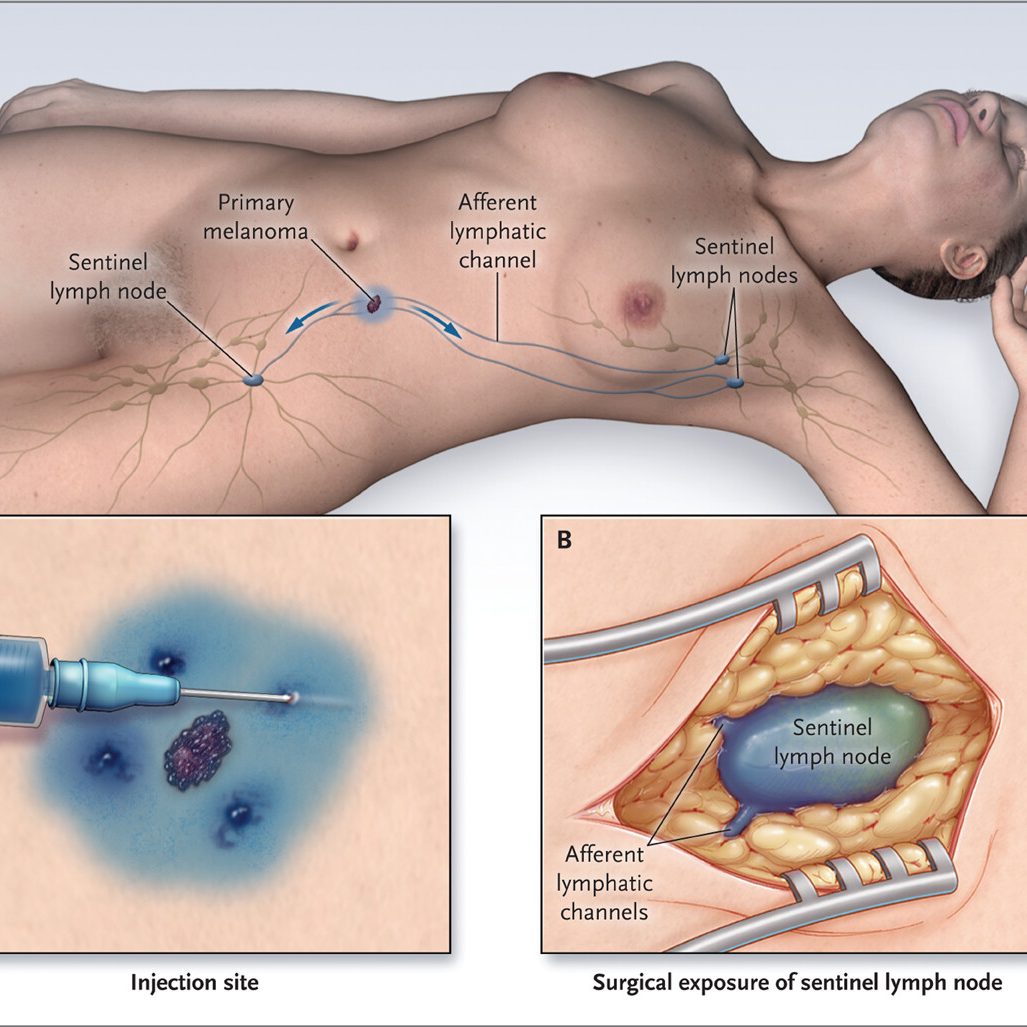
A sentinel lymph node biopsy (SLNB) is a surgical procedure used to determine whether certain aggressive skin cancers, such as melanoma or merkel cell cancer, have spread to the lymphatic system.
It is a minimally invasive test that provides vital information for staging cancer and planning further treatment, without removing more lymph nodes than necessary.
What Is a Sentinel Lymph Node?
- The sentinel lymph node is the first lymph node (or group of nodes) where cancer cells are most likely to spread from the primary tumour.
- By checking this node, surgeons can predict whether cancer has spread further into the lymphatic system.
If the sentinel node is cancer-free, it’s unlikely that other nodes are affected.
Why Is a Sentinel Lymph Node Biopsy Done?
SLNB is most commonly used in:
- Melanoma or other aggressive skin cancer (e.g. Merkel cell carcinoma) – to assess the risk of cancer spread and guide further treatment, a prognostic investigation tool.
This procedure helps avoid unnecessary removal of multiple lymph nodes, reducing the risk of complications like lymphoedema.
How the Procedure Works
- Tracer Injection
- A small amount of radioactive dye is injected near the tumour site, usually on the day of scheduled surgery.
- This travels through lymphatic channels to highlight the sentinel node on scanning image.
- Then at the time of surgery, another blue dye is injected around the tumour site, just before the formal procedure begins.
- Identification of Sentinel Node(s)
- During surgery, the surgeon locates the sentinel node using a special scanner and/or visualises the blue dye.
- Removal and Analysis
- The sentinel node(s) are removed through a small incision, and sent for formal histopathological analysis.
Risks and Considerations
While generally safe, possible risks include:
- Bruising, swelling, fluid collection (e.g. seroma) or haematoma at the biopsy site – subsequent infection is also possible
- Temporary pain or stiffness
- Rare allergic reaction to the dye
- Small risk of limb lymphoedema (though much less than full lymph node dissection)
Recovery After Sentinel Lymph Node Biopsy
- Usually performed as a day surgery procedure.
- Mild discomfort or swelling may occur at the biopsy site.
- Most patients return to light activities within a few days.
- Final pathology results are usually available within 1–2 weeks.
What the Results Mean
- Negative SLNB: No cancer cells found → cancer is less likely to have spread.
- Positive SLNB: Cancer cells detected → further treatment, such as additional surgery, chemotherapy, or radiotherapy, may be recommended.
When to Discuss Sentinel Lymph Node Biopsy
Patients diagnosed with early-stage melanoma or other aggressive skin cancer should ask whether SLNB is recommended as part of their treatment plan.
It provides crucial information while avoiding unnecessary removal of healthy lymph nodes.
About Dr Paul Cheng
I’m Dr Paul Cheng, FRACS, Specialist Plastic, Aesthetic & Reconstructive Surgeon, with expertise in skin oncological and reconstructive surgery. I also work in the public sector with head & neck multidisciplinary teams to ensure patients receive safe, evidence-based cancer care alongside reconstructive options for optimal outcomes.
📅 Book a Consultation if you have been diagnosed with melanoma and wish to discuss whether a sentinel lymph node biopsy is appropriate for you.