Introduction
Choosing to undergo plastic surgery is a deeply personal decision – and selecting the right surgeon is just as important as the procedure itself.
The right specialist will not only aim for natural, individualised results but will also prioritise safety, ethics, and long-term care. Unfortunately, with the rise of unregulated “cosmetic clinics,” it can be confusing for patients to know who is truly qualified.
This guide will help you understand what qualifications matter most when choosing a plastic surgeon.
1. Look for FRACS (Plastic & Reconstructive Surgery) Qualification
The Royal Australasian College of Surgeons (RACS) is the only recognised body in Australia and New Zealand that awards the title of Specialist Plastic Surgeon.
✅ FRACS (Plastic & Reconstructive Surgery) means:
- The surgeon has completed extensive specialist training (8–12 years after 5-6 years of medical school).
- They are trained in both aesthetic and reconstructive surgery, ensuring a deep understanding of anatomy and function.
- They adhere to strict ethical, safety, and continuing education standards.
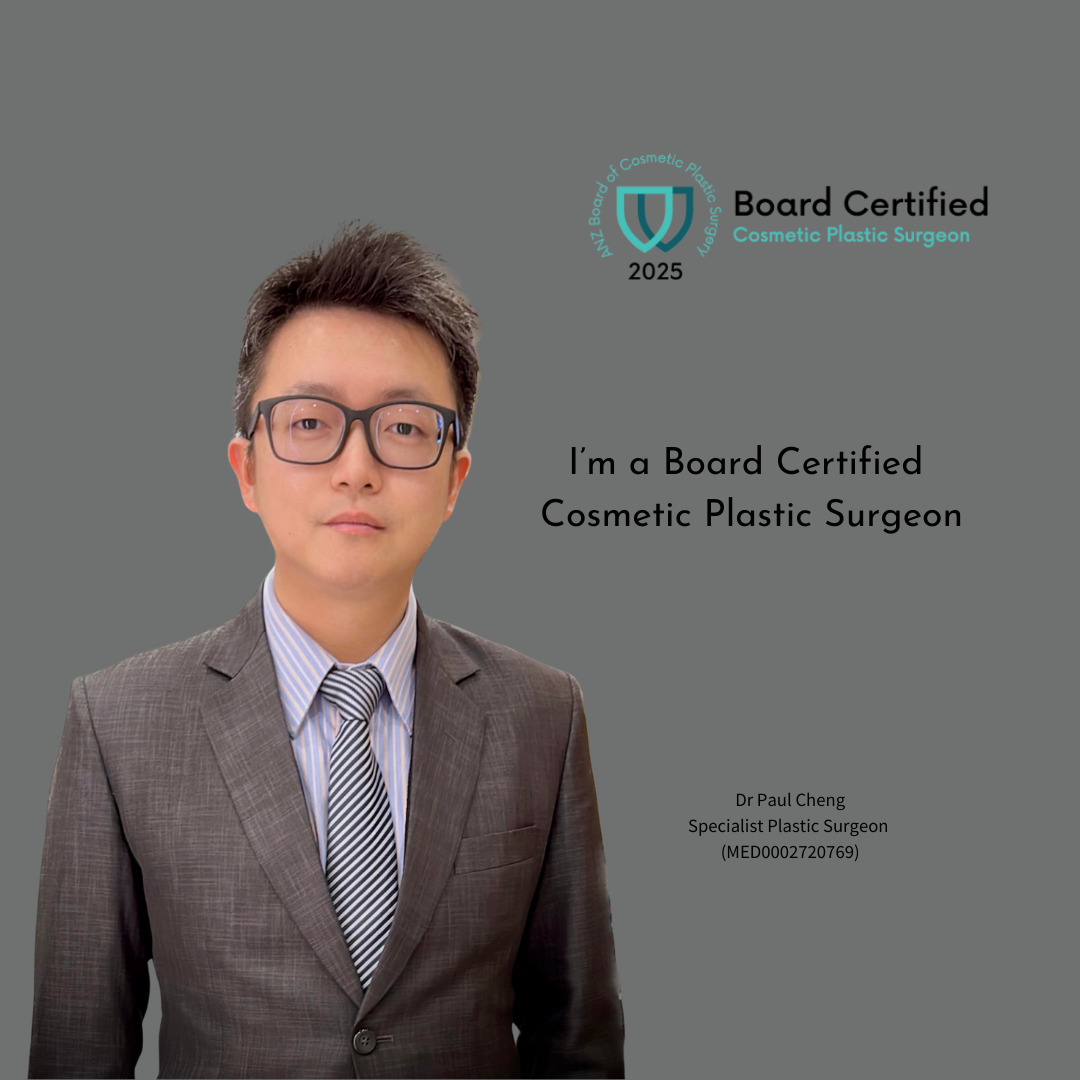
✅ ANZBCPS Board Certified Cosmetic Plastic Surgeon means:
- The surgeon has achieved a recognised standard of excellence in cosmetic surgery, demonstrating expertise, training, and ongoing commitment to ethical and evidence-based practice.
- The certification is reviewed annually, ensuring continued adherence to the ANZBCPS Board’s standards.
⚠️ Beware: Terms like “cosmetic doctor/surgeon” or “cosmetic physician” are not regulated titles in Australia. Anyone with a basic medical degree can use these terms, regardless of surgical training.
2. Check Professional Memberships
Professional memberships show commitment to ongoing education and maintaining high standards. Look for affiliations with recognised bodies such as:
- ASPS – Australian Society of Plastic Surgeons
- ASAPS – Australasian Society of Aesthetic Plastic Surgeons
- ISAPS – International Society of Aesthetic Plastic Surgeons
Surgeons who are active members often attend international conferences and stay updated with the latest surgical techniques and safety guidelines.
3. Review Surgical Experience & Specialisation
Plastic surgeons often have areas of special interest. Ask about:
- Procedures frequently performed (e.g., eyelid surgery, facelifts, breast augmentation mastopexy, etc).
- Experience in both aesthetic and reconstructive surgery – a broad background often leads to better problem-solving in complex cases.
- Before-and-after photos – realistic results matter more than dramatic transformations.
4. Prioritise Safety & Accredited Facilities
All surgical procedures (those involving more than local anaesthesia alone) should be performed in accredited hospitals or licensed day surgery centres, not in office-based procedure rooms.
Key questions to ask your surgeon:
- Where will the procedure be performed?
- What type of anaesthesia will be used, and who will administer it?
- What is the aftercare and follow-up plan?
A qualified plastic surgeon will always put safety first and explain potential risks and recovery in detail.
5. Communication & Personal Comfort
A responsible surgeon should:
- Take time to listen to your concerns and goals.
- Provide honest, realistic advice – never push you into a procedure.
- Make you feel comfortable asking questions about every aspect of the surgery.
Trust and open communication are essential for achieving results that feel right for you.
Final Thoughts
Plastic surgery should never be rushed or taken lightly. Choosing a qualified, FRACS-accredited Specialist Plastic Surgeon ensures you are in the hands of someone trained to deliver safe, ethical, and natural results.
Always take your time to research, ask questions, and choose a surgeon who makes you feel informed and confident.
About Dr Paul Cheng
I’m Dr Paul Cheng, FRACS, a Specialist Plastic, Aesthetic & Reconstructive Surgeon practising on the Gold Coast, QLD and in Ballina, NSW.
I believe in providing individualised, safe, and evidence-based care for every patient. If you’d like to discuss a procedure or learn more, please book a consultation or follow me on Instagram @dr.paulcheng for educational updates.